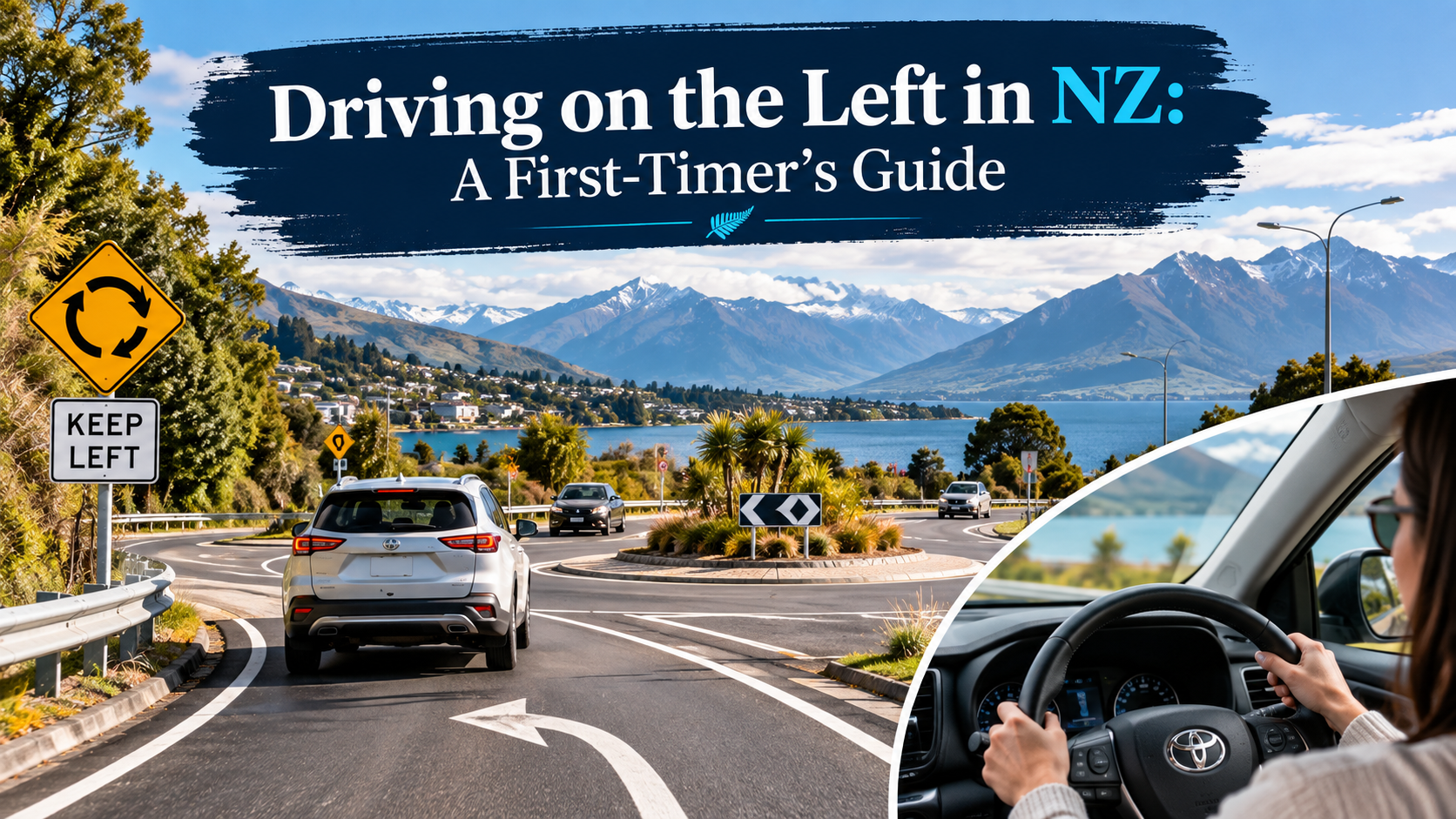
For anyone who has only ever driven on the right, the idea of driving on the left can feel like the single biggest hurdle of a New Zealand trip. In practice, it is far more manageable than it sounds, and most visitors settle into it within the first hour behind the wheel. This guide walks through exactly what changes, where the real mistakes happen, and how to build the muscle memory before you reach a busy road.
New Zealand drives on the left, with the steering wheel on the right side of the car. The biggest early challenges are not the road itself but small habits: reaching for the indicator and finding the wipers instead, misjudging how far left your car sits, and getting roundabout directions backwards under pressure. Fifteen minutes of deliberate practice in a quiet area before joining traffic solves most of this.
Why This Feels Harder Than It Actually Is
The nervousness around left-hand driving usually has less to do with the road rules and more to do with muscle memory. Years of driving on the right build automatic reflexes, and those reflexes do not switch off just because you have read the rules. Your hands still reach for where the indicator used to be. Your instinct still pulls you slightly toward the wrong side of the lane.
This is a normal adjustment, not a sign you are unsuited to it. Most of the discomfort fades within the first few kilometres, and almost entirely by the end of day one, once your body starts building new habits to replace the old ones.
It helps to remember that the road rules themselves are not complicated. You already know how to judge a gap, read a sign, and react to traffic. What changes is which side those instincts point toward, and that is a matter of repetition rather than relearning how to drive from scratch.
The Core Change: Steering Wheel and Road Position

Where the Steering Wheel Sits
In a right-hand drive car, the driver's seat is on the right side of the vehicle, and you sit closer to the centre line of the road rather than the edge. This single change affects how you judge your position in the lane, how close you feel to oncoming traffic, and how you line up for turns.
Indicators and Wipers: The Classic Mix-Up
This is the single most common early mistake, and almost every visitor makes it at least once. In most right-hand drive cars, the indicator stalk is on the right side of the steering column, and the wiper stalk is on the left, the reverse of what left-hand drive cars use. The result is a driver meaning to signal a turn and instead switching the wipers on in dry weather.
It is harmless, but it catches people off guard enough to be worth practising before you need it. Sit in the car for a minute before you drive anywhere and flick both stalks a few times so your hand learns the new position.
Your First Fifteen Minutes Behind the Wheel
The first stretch of driving matters more than any amount of reading beforehand. A few simple habits make it far smoother.
- Start in a quiet car park or a low-traffic residential street rather than heading straight onto a main road.
- Say "stay left" out loud the first few times you pull away from a stop, especially after parking or a rest break, since this is when old habits resurface fastest.
- Practise a few slow turns, both left and right, before attempting them in traffic.
- If you are travelling with someone else, ask them to watch your lane position from the passenger seat and say something if you drift.
- Avoid driving for the first time immediately after a long-haul flight. Fatigue and an unfamiliar driving side together make mistakes far more likely.
If you are collecting your car straight from the airport, our Auckland Airport car rental guide has practical tips for easing into the drive rather than jumping straight into motorway traffic.
Roundabouts: Where Most Visitors Get Confused
Roundabouts are consistently the part of left-hand driving that causes the most hesitation, largely because the direction of travel is the exact opposite of what right-hand traffic countries use.

Which Way New Zealand Roundabouts Go
Traffic moves clockwise around a New Zealand roundabout, and you give way to vehicles already on the roundabout and to traffic approaching from your right before entering. If you are used to counterclockwise roundabouts, this reversal is often where instinct briefly fights against what you know to be correct.
Multi-Lane Roundabouts
Larger roundabouts with more than one lane add a second layer of decision-making: which lane to enter from and which lane to exit into. A simple rule helps here. Use the left lane if you are turning left or going straight ahead when it is the more direct path, and use the right lane if you are turning right or making a full loop back the way you came. Signal your exit as you pass the entry point before the one you plan to leave at, not earlier.
Staying in Your Lane: Reading New Zealand's Road Markings
New Zealand roads use a mix of markings that help you judge position once the steering side has flipped.
- A solid yellow line down the centre means no passing is allowed in that direction.
- A broken white centre line means passing is allowed when it is safe.
- A solid white edge line marks the outer boundary of the lane, useful for judging how far left you are sitting from an unfamiliar seat position.
- Signs before one-lane bridges show which direction has priority using an arrow, a detail covered in full in our driving rules guide if you want the complete breakdown of intersection and give way rules.
Motorways and Overtaking on the Left
Multi-lane motorways introduce one more habit to unlearn. In New Zealand, as in other left-hand traffic countries, the left lane is the default travel lane and the right lane is reserved for overtaking slower traffic, not the other way around.
- Keep left except when passing, and return to the left lane once you have overtaken.
- When merging onto a motorway, traffic already on the motorway generally has priority, so match your speed before merging rather than expecting cars to make room.
- Exits are typically on the left side of the motorway, so position yourself early rather than crossing lanes at the last moment.
Parking and Manoeuvring From the Right-Hand Seat
Reversing and parking feel different from the right side of the car, mainly because your sense of the car's width shifts.
- When parallel parking, the passenger side of the car, now on your left, is harder to judge than the driver's side. Take it slower than you normally would until you get a feel for it.
- Angle parking in car parks is generally easier, since both sides remain roughly symmetrical from either seat.
- Reversing out of a park in a busy car park benefits from an extra check over your shoulder, since mirror positioning feels slightly different from an unfamiliar seat.
Judging Distance From an Unfamiliar Seat

Sitting on the right side of the car changes more than which way you turn the wheel. It also changes how far away everything on your left feels, which matters most around cyclists, parked cars and narrow shoulders.
- Cyclists on the left edge of the road can feel closer than they actually are at first, simply because you are viewing them from a seat position you are not used to.
- Give extra room when passing anything on your left until your sense of the car's width catches up with your new seat position, usually within the first day.
- Narrow rural roads with no marked shoulder are where this matters most, since there is less margin for a misjudged gap.
Driving at Night While Still Adjusting
Low light removes some of the visual cues that help during the day, so the adjustment period can feel longer after dark.
- Oncoming headlights sit on the opposite side of your field of view compared to what you are used to, which can be briefly disorienting on unlit rural roads.
- Reflective road markers along the centre line and edges are common on New Zealand highways and are worth using as a reference for lane position at night.
- If it is your first night drive, choose a familiar or well-lit route rather than a winding rural road you have not driven before in daylight.
Quick Reference: What Flips and What Doesn't

| In New Zealand | If You're Used To Right-Hand Traffic |
|---|---|
| Drive on the left side of the road | You previously drove on the right |
| Steering wheel on the right side of the car | You previously sat on the left side |
| Indicator stalk usually on the right | Wiper stalk was usually on the right instead |
| Roundabouts go clockwise | You previously went counterclockwise |
| Overtaking lane is the right lane | Slower traffic was usually the right lane |
| Give way to traffic from your right | You previously gave way to traffic from your left |
Automatic or Manual: Does It Change the Adjustment
Most rental vehicles in New Zealand are automatic, which removes one variable from an already unfamiliar setup. Without a gear lever to operate with your left hand, you can put more attention toward lane position and road direction in the first few days. If you are choosing a car for your trip, our vehicle range shows which models are available as automatics, which is generally the easier choice for a first-time left-hand driver rather than adding a manual transmission on top of the adjustment.
Common Mistakes First-Timers Make
A short list of the errors that come up most often, almost all tied directly to muscle memory rather than a lack of knowledge.
- Turning into the wrong lane after completing a turn, since the habitual lane no longer matches the correct one.
- Drifting toward the centre line on quiet roads with no other traffic to use as a visual reference.
- Hesitating at roundabouts long enough to confuse other drivers about your intentions, which causes more risk than a slightly wrong but confident decision.
- Misjudging the car's width on the passenger side when parking or passing parked cars.
- Forgetting the direction change after a rest stop, particularly pulling out of a driveway or car park onto the wrong side.
Building Confidence Before the Open Road
A short, deliberate warm-up removes most of the anxiety before it becomes a problem on a real route.
- Choose a quiet residential area or an empty car park for your first ten minutes.
- Practise a few roundabouts at low speed if one is nearby, even if it means going around twice.
- Do a handful of left and right turns until they start to feel automatic rather than deliberate.
- Only then move onto a main road, ideally one without heavy traffic for your first proper drive.
Once the basics feel steady, you can shift your focus from the mechanics of driving to actually enjoying the route ahead, whether that is a short trip around town or the start of a longer road trip.
How a Passenger Can Help You Adjust Faster
If you are travelling with someone else, they can shave real time off the adjustment period without needing to do anything technical.
- Ask them to call out "roundabout" or "left turn" a beat before you reach one, giving your brain a moment to switch modes rather than reacting at the last second.
- A passenger watching your left-side gap to parked cars or cyclists can flag it early, before it becomes a close call.
- Swapping who navigates and who drives every hour or so on a longer trip keeps fatigue from compounding the adjustment, since tired reflexes default back to old habits fastest.
Even a passenger who has never driven in New Zealand themselves can still act as a second set of eyes for the first stretch, which takes real pressure off the driver.
Frequently Asked Questions
Is driving on the left difficult for first-time visitors?
It feels harder in the first few minutes than it actually is. Most visitors adjust within the first hour, with roundabouts and the indicator stalk being the two most common early stumbling points.
Which side does the steering wheel sit on in New Zealand cars?
The steering wheel sits on the right side of the vehicle, since the driver sits closer to the centre of the road rather than the edge.
Do New Zealand roundabouts go clockwise or counterclockwise?
Clockwise. You give way to traffic already on the roundabout and to vehicles approaching from your right before entering.
Is it easier to drive an automatic when adjusting to the left side?
Yes, for most first-time visitors. Removing the need to operate a gear lever with your left hand leaves more attention for lane position and road direction.
How long does it take to get used to driving on the left?
Most visitors feel noticeably more comfortable within the first hour of driving, and fully adjusted by the end of the first day, particularly if the first stretch of driving happens somewhere quiet.
What is the most common mistake new left-hand drivers make?
Reaching for the indicator and turning the wipers on instead, since the stalks are on opposite sides compared to right-hand drive cars. It is harmless, but worth practising before you need to signal in traffic.
Should I avoid driving at night on my first day in New Zealand?
If possible, yes. Night driving removes some of the visual cues that help you judge lane position, so it is easier once you have had a full day to adjust on familiar, well-lit roads first.
Can a passenger help me adjust to driving on the left?
Yes. A passenger calling out upcoming roundabouts and turns, and watching your gap to the left side of the road, meaningfully speeds up how quickly the adjustment feels natural.
At Bubble Rentals, we hand every first-time visitor a car that makes this adjustment as easy as possible, with a quick walkthrough at pickup so you are not figuring out indicators and mirrors for the first time in traffic.