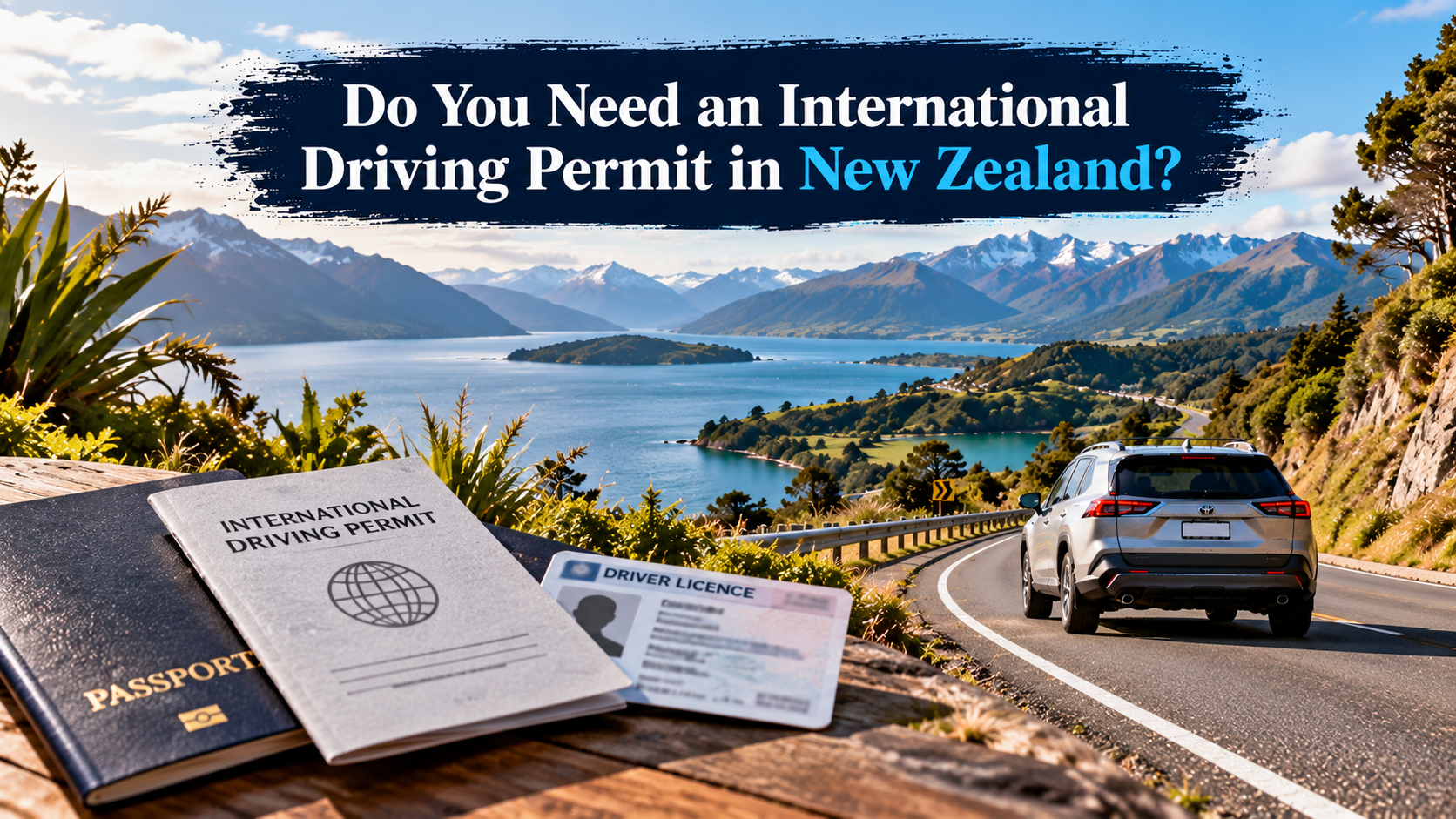
Not always. New Zealand requires your overseas licence to be readable in English. If it already is, you can drive on it directly, and an International Driving Permit is not compulsory. If it is not in English, you need an accurate English translation, and an IDP is one of the accepted ways to provide that translation.
What an International Driving Permit Actually Is
An IDP is not a licence in its own right. It is a standardised translation document, issued under a United Nations Convention on Road Traffic, that restates the details on your home licence, including your name, photo and the vehicle classes you can drive, in several languages including English.
New Zealand Police and rental staff use it the same way they would use any certified translation: to confirm what your original licence actually permits when they cannot read it directly. Because of this, an IDP only has meaning when it travels with the licence it was issued against. Carrying an IDP without the original licence gives you nothing to show, since the permit itself has no independent driving authority.
The reasoning behind this rule is straightforward rather than bureaucratic for its own sake. A licence written in an unfamiliar script tells a police officer nothing about whether the holder is qualified to drive a car, a motorcycle or a heavy vehicle. The translation, whichever form it takes, closes that gap without requiring every officer or rental agent to recognise licences from dozens of countries.
When You Actually Need One
You need an IDP, or another accepted form of English translation, in a specific set of situations rather than as a blanket rule for all visitors.

Situations Where a Translation Is Required
- Your licence is printed entirely in a language other than English.
- Your licence mixes English with another script, but the vehicle class and expiry details are not shown in English.
- A rental company's own booking terms ask for one specifically, regardless of what New Zealand law strictly requires.
Situations Where No Translation Is Needed
- Your licence is printed in English and clearly shows your photo, name and licence class.
- Your licence is current, has not been suspended or disqualified in the country that issued it, and you have not been disqualified in New Zealand.
- You have not already obtained a New Zealand licence since your last arrival, which would override your overseas one.
How Long You Can Drive on an Overseas Licence
This is the part visitors get wrong most often, partly because older articles online still quote a flat 12-month rule. As of the current NZTA guidance, the allowance depends on the vehicle class.

| Overseas Licence Type | Time You Can Use It in New Zealand |
|---|---|
| Car licence | Up to 18 months from the date you arrive |
| Motorcycle licence | Up to 12 months from the date you arrive |
| Truck licence | Up to 12 months from the date you arrive |
Whichever category applies to you, the same translation rule sits alongside it. If your licence is not in English, you still need a translation or IDP for the entire period you plan to drive, not just for the first few months.
Where English Licences Usually Come From
New Zealand does not care which country issued your licence. It cares whether the document itself is in English. In practice, this means the following general pattern, though you should always check your own licence rather than assume based on nationality.
| Common Situation | Usually Already in English | Usually Needs Translation or IDP |
|---|---|---|
| United Kingdom, United States, Canada, Australia, Ireland licences | Yes | No |
| South African licences | Yes | No |
| Many Indian licences | Often, but check your specific card | Sometimes, if not clearly in English |
| United Arab Emirates licences | Often bilingual Arabic and English | Check if English section is complete |
| Germany, France, Italy, Spain licences | No | Yes |
| Japan, South Korea, China licences | No | Yes |
| Thailand, Vietnam, most of South America | No | Yes |
If any doubt exists, treat it as a licence that needs a translation. Arriving with one and not needing it costs you nothing. Arriving without one and needing it can stop you from driving at all.
Acceptable Forms of Translation
New Zealand does not insist on an IDP specifically. It insists on an accurate English translation, and an IDP is simply one recognised way to provide that.
Who Can Provide an Accepted Translation
- A translation service approved by Waka Kotahi NZ Transport Agency.
- A diplomatic representative at a high commission, embassy or consulate.
- The authority in your home country that issued your original licence.
- An International Driving Permit issued in accordance with a United Nations Convention on Road Traffic.
- For licences issued in China specifically, a translation document from a Notary Public Office is also accepted.
If your country's motoring authority makes IDPs simple to obtain, that route is usually faster than arranging a separate certified translation. If it does not, a translation from an approved provider works just as well under New Zealand rules.
Getting an IDP Before You Travel
An IDP has to be arranged in your home country before you leave. New Zealand does not issue them to visitors, and there is no process to apply for one after you have already landed.
- Most countries issue IDPs through their national motoring authority or an equivalent automobile association.
- The application is usually processed quickly, often within a day, once you provide your current licence and a passport photo.
- A small fee applies, and it is minor compared to the rest of a trip.
- Apply with at least a few weeks of buffer, since processing speed varies by country and postal delivery can add time.
How Long an IDP Itself Stays Valid
An IDP issued under the relevant UN convention is generally valid for one year from its date of issue. This is separate from how long you are allowed to drive in New Zealand under the table above. Two points are worth being precise about.

- The IDP's own expiry date matters less than whether your original overseas licence is still current, since the IDP only works alongside that licence.
- New Zealand authorities have indicated that an IDP which expired within the last six months can still be accepted, provided your underlying overseas licence remains valid. This is a narrow allowance, not a reason to let your IDP lapse deliberately.
If your trip runs longer than your IDP's validity, arrange a renewal before you travel rather than assuming an expired one will be accepted.
What Information an IDP Actually Contains
An IDP is a small booklet rather than a card, and it follows a standard format regardless of which country issues it. It typically includes your photo, personal details copied from your original licence, and a breakdown of vehicle categories, commonly labelled A for motorcycles, B for cars, C for larger goods vehicles, D for passenger vehicles and E for combinations with trailers. Each category is translated into multiple languages side by side, which is why the booklet works across so many countries without needing a different version for each one.
This also explains why New Zealand treats it as a translation tool rather than a licence. The permissions themselves still come entirely from your original overseas licence, and the IDP is only there to make those permissions readable.
If You Are Staying Longer or Converting Your Licence
Everything above applies to short visits and holidays. If you are staying in New Zealand longer, for example on a working holiday visa, the rules shift once you pass the visitor driving window for your licence type. At that point you typically need to convert to a New Zealand driver licence rather than continue relying on an overseas licence or IDP.
It is worth knowing one detail before you convert: once Waka Kotahi NZTA issues you a New Zealand driver licence, your overseas licence and IDP stop being valid for driving in New Zealand, even if they have not technically expired. If your plans are still open-ended, check directly with NZTA or an AA licensing agent for the current process, since conversion requirements depend on which country issued your original licence.
Rental Car Companies May Ask for More Than the Law Requires
New Zealand law sets the minimum. A rental company's booking policy is a separate, additional layer, and it is where most last-minute problems happen.
Some providers request an IDP even when your licence is legally fine without one, particularly if your licence uses a script their front-desk staff are not trained to check quickly. This is a business decision on their part, not a legal requirement, but it can still block you from collecting a booked vehicle if you turn up without what they asked for.
Read your booking confirmation closely before you fly, and contact the rental company directly if the documentation section is unclear. If you are collecting a car straight off a flight, our Auckland Airport car rental guide covers exactly what to have ready at the counter, so you are not sorting out paperwork with a queue behind you.
What Happens If You Are Asked and Cannot Provide One

If your licence is not in English and you cannot produce a translation or IDP, New Zealand Police can treat your licence as invalid for driving purposes on the spot.
- You can be fined for driving without a valid licence or permit.
- If a police officer tells you to stop driving, continuing can lead to your vehicle being impounded, at your own cost, for up to 28 days.
- If you are involved in an incident while driving without a valid licence, your rental insurance cover may not apply, leaving you liable for damage costs directly.
None of this requires bad intent. It is usually just a visitor who assumed their licence would be fine because it worked in other countries they had driven in before.
Common Mistakes Tourists Make With This Rule
A handful of avoidable mistakes account for most of the confusion around IDPs, and they are worth naming directly.
- Assuming that coming from an English-speaking country automatically means an IDP is required. In most of these cases, the opposite is true: no IDP is needed at all.
- Leaving the IDP in a hotel safe or a suitcase and carrying only the original licence day to day, which defeats the purpose if you are stopped or asked for it at a rental counter.
- Applying for an IDP a day or two before departure and discovering the home country's process takes longer than expected.
- Assuming an IDP replaces the original licence rather than working alongside it. Losing your original licence does not leave you with a usable IDP on its own.
- Booking a rental car without reading the documentation section of the confirmation email, then finding out at pickup that the company wants something extra.
Two Quick Examples
A traveller arriving from Berlin with a German licence, printed entirely in German, needs either an IDP or an approved translation before they land, since neither their licence's language nor New Zealand's rules make an exception for it. Once they have one, they can drive a rented car for up to 18 months as a visitor, well beyond the length of most holidays.
A traveller arriving from London with a UK licence, already printed in English, needs neither. They can walk up to a rental counter with just their original licence and passport, assuming the rental company itself has no additional policy asking for more.
Before You Travel: A Short Checklist
- Check what language your licence is printed in, not just where it was issued.
- If it is not in English, decide between an IDP and an approved translation, and arrange it before you leave home.
- Confirm your specific rental company's own documentation requirements, since these can be stricter than the legal minimum.
- Keep your original licence and translation or IDP together in your travel documents, not in separate bags.
- Note your own visitor driving window: 18 months for a car licence or 12 months for a motorcycle or truck licence, from your arrival date.
Frequently Asked Questions
Do I need an international driving permit to drive in New Zealand?
Only if your licence is not in English; if it already is, you can drive on it directly for up to 18 months for a car licence, without an IDP.
Can I apply for an international driving permit once I have arrived in New Zealand?
No. An IDP must be arranged in your home country before departure. There is no way to obtain one once you are already in New Zealand.
How long does an overseas car licence last in New Zealand?
Up to 18 months from your arrival date, provided it remains current and you have not been disqualified in New Zealand or in the country that issued it.
Is an IDP the same as a translated licence?
No. An IDP is one accepted form of translation, but New Zealand also accepts translations from an NZTA-approved translator, a diplomatic representative, or your licence's issuing authority.
Does every rental company in New Zealand require an IDP?
No. Requirements vary by company. Some only ask for one if your licence is not in English, while others request one as standard policy regardless. Always check your specific booking conditions.
Can I use an international driving permit on its own, without my original licence?
No. An IDP only has legal standing when carried together with the original licence it was issued against.
What happens if my IDP has expired?
New Zealand authorities have allowed IDPs expired within the last six months to still be accepted, as long as your underlying overseas licence is current. It is safer to renew before travelling rather than rely on this.
Can I drive a motorhome or campervan on the same rules?
Generally yes, if it falls within the car licence category your overseas licence covers. Larger motorhomes can sometimes require a higher licence class, so check the vehicle's weight rating against what your licence permits before booking.